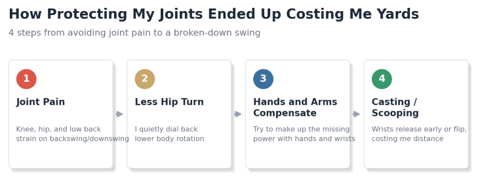
For years I was known as a long hitter on the course. People I played with would react to how far my tee shots went, and I got used to it. After dropping from 90.9kg to 75.3kg with jump rope, that reaction disappeared. At first I figured losing weight meant losing some power, and left it there. But round after round, the drop in my golf distance was too big to explain by weight alone. When I dug into it, I found that the moves I had quietly built into my swing to protect my knees, hips, and lower back had hardened into casting and scooping.
I Expected Some Distance Loss From Losing Weight
I was prepared for some drop in swing speed after losing weight. An InBody scan I had done a while back showed my skeletal muscle mass barely changed, down just 0.3kg, so it was not like I had lost a lot of muscle. Still, less body mass rotating through the swing meant less raw momentum, and I could accept that much. But the actual drop in distance was far bigger than what the weight change alone would predict. Something else was going on.
What I Quietly Changed to Protect My Knees, Hips, and Back
I have written before about moving my jump rope sessions from the GX Room to the basement squash court because of knee pain. That same knee turned out to cause trouble on the golf course too. A big lower body turn on the backswing made my knee ache, and rotating my hips fast on the downswing left my lower back sore. To avoid that pain, I started turning my hips less and relying more on my arms and hands to make contact, without ever deciding to do it on purpose.
What Casting Actually Is
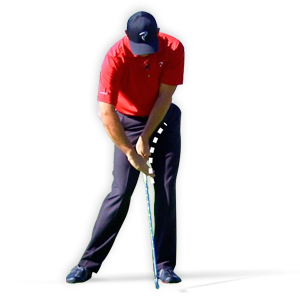
In simple terms, casting means the wrist cock releases too early in the downswing. Ideally you hold that wrist angle until just before impact, then release it at the last moment so the clubhead reaches top speed right as it meets the ball. When hip rotation drops off, the arms and wrists try to drive the swing instead, and the wrist cock lets go too soon. The result is that clubhead speed has already dropped before the ball is even struck.

What Scooping Actually Is
Scooping happens at impact, when the wrists flip back as if trying to lift the ball into the air. Because the lower body cannot hold its position, the body straightens up early, a pattern called early extension, and the hands try to make up for the lost power by flipping. That adds loft, so the ball flies higher, but ball speed drops at the same time.

What I’m Fixing Right Now
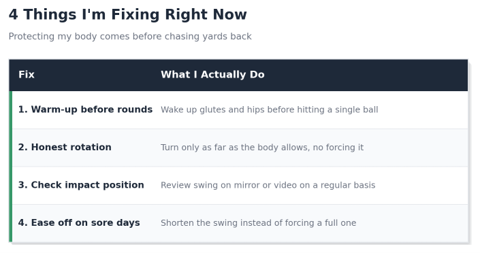
I only realized how much my swing had changed after watching video of it during a lesson. I have not fixed it completely, but I am working on a few things. A warm-up before rounds that wakes up my glutes and hips first. Practicing an honest amount of hip rotation instead of forcing more than my body can handle. Checking my impact position regularly with a mirror or video. And on days when the pain is worse, taking shorter swings instead of forcing a full one.
Wrapping Up
Even with these changes, the number on the launch monitor has not fully come back yet. I am still working out the balance between protecting my body and getting distance back. I assumed losing weight would fix everything, but the real issue was never the weight itself. It was the swing habits that hardened while I was trying to avoid pain, and that is the lesson I actually took from this.