
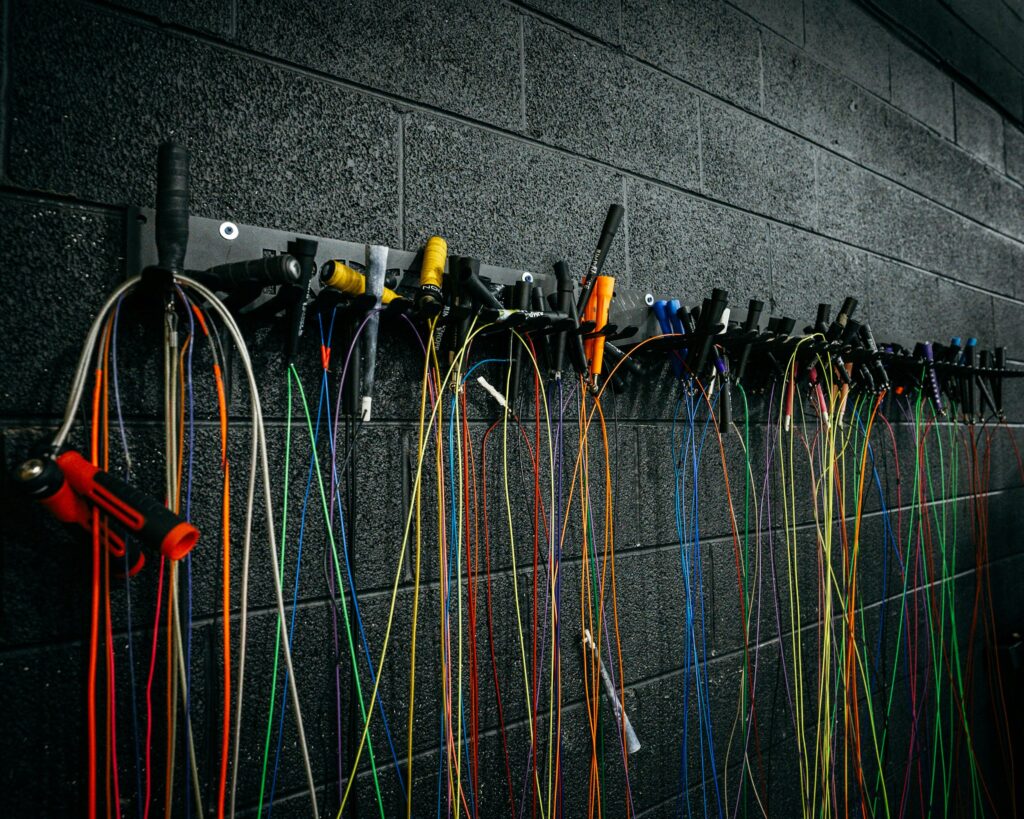
Before I started jump rope exercise, I mainly enjoyed running along Namsan Mountain’s circular trail and the uphill course leading up to N Seoul Tower.
Running requires several things. First and foremost, you need the “willpower” to actually go outside or step onto a treadmill. If we convert that willpower into a score of 100, the actual follow-through might only be around 30 to 40. Accounting for individual differences, that’s probably a fairly conservative estimate.
In exercise psychology, this phenomenon is actually called the “intention-behavior gap.” A systematic review and meta-analysis published in 2023, which analyzed data from nearly 30,000 people, found that almost half of those who intended to exercise failed to actually follow through. Another real-time tracking study on middle-aged women found that even when exercise intention was formed in the moment, the actual follow-through rate was only in the 10% range. These numbers aren’t far from what I’ve felt myself — if anything, they may be even more sobering.
Whether you use the morning or lunch break, or simply put on your running shoes and head out after work, the preparation process itself is already a huge hurdle. Changing clothes, checking the weather, deciding on a route, and stepping out the door — anyone in their 40s or 50s knows how many excuses can flash through your mind in those few short minutes.
I’m not saying running is bad
Please don’t misunderstand me. Running is a wonderful form of cardio. The sense of accomplishment I felt walking Namsan’s circular trail and climbing the uphill course is still a cherished memory, and I still run on weekends. But for me, there was a wall called “consistency.”
- If the weather isn’t good, I can’t go out
- Strain builds up on the knees and ankles
- The long preparation time makes it easy to say “I’ll skip today”
- The treadmill is a battle against boredom
These four things kept stopping me.
Why I chose jump rope
Jump rope is different. All you need is a single rope. Whether it’s a balcony, living room, or underground parking garage, as long as there’s space, you can start right away. That formula I mentioned earlier — “willpower 100, actual action 30 to 40” — changes completely when it comes to jump rope.
That’s because the entire preparation process of putting on shoes, going outside, and walking a route simply disappears. From the moment you decide to do it to the moment you pick up the rope, one minute is enough.
Starting that way, I’ve kept up jump rope consistently for over 100 days now, and it’s come back to me as a visible result: weight loss.
Why I recommend jump rope to people in their 40s and 50s
- Low barrier to entry – all you need is a jump rope, and about a pyeong (roughly 3.3㎡) of space
- High efficiency in short time – just 10-15 minutes gives sufficient cardio effect
- Weather independent – can be done indoors anytime
- Adjustable joint strain – you can control the intensity and method yourself
In my next post, I’ll go into detail about the trial and error I experienced while keeping up jump rope for over 100 days, and how beginners can start without straining their knees or ankles.