
Same Size L, So Why Does One Shirt Hang Loose and Another Pinch?
I wrote before about buying the wrong size by guessing after losing weight, and how I eventually broke out a measuring tape to get my real numbers. But even once I knew my measurements, something still did not add up. Two shirts, both labeled L, and one fits loose while the other pinches at the underarms. At first I figured every brand just runs sizes differently. Then I looked closer at the tag and realized the real answer was somewhere else entirely: the fabric blend ratio.
What Years of Making Clothes Taught Me
I spent a long stretch of my career making clothes for a living, working directly with fabric and production. What I learned there is that the exact same pattern, cut from different fabric, produces a completely different fit. As a shopper, you only see the size printed on the tag. What actually creates the room in a garment is how much the fabric itself stretches.
How to Actually Read the Blend Label
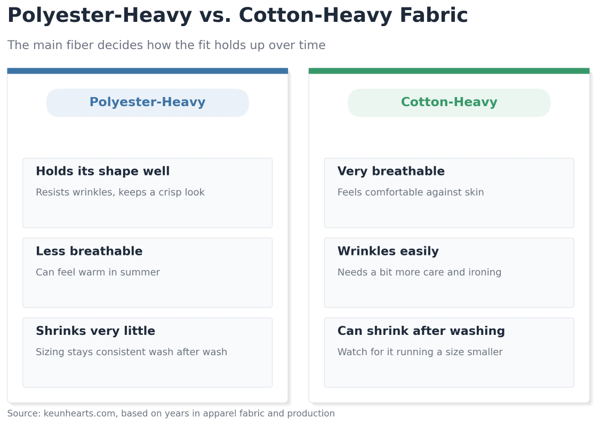
The blend ratio printed inside the garment tells you most of what you need to know. At 2 percent spandex (elastane) or less, there is almost no stretch, so the fit only works if the piece was cut generously to begin with. Around 5 percent gives you enough give for comfortable movement. At 8 percent or higher, you are looking at something closer to leggings, hugging the body. Fabric with more polyester tends to hold its shape but breathes less, while fabric with more cotton feels more comfortable but can shrink after washing. That is why the same size L can feel completely different depending on this ratio.

Construction Matters Just as Much as the Fabric
Right alongside the blend ratio, construction plays a huge role. How much ease a pattern builder builds in changes how roomy the same measurement feels. Seam placement at the underarm and shoulder, and how generous the seam allowance is, shape the real, everyday fit. None of that shows up in the number on the tag, so in the end you have to either try it on or feel the fabric with your own hands.
These Days, I Check It This Way Before Buying
Now, when I am shopping, I check the blend label first. Then I grab the fabric and stretch it gently in both directions to feel how much give it has. Last, I feel the seams at the underarm and shoulder to check the allowance. Going through these three steps has cut down noticeably on how often I end up returning something.

Even Knowing All This, I Still Get Surprised
Even checking all of this, I still get it wrong sometimes. Shrinkage after washing in particular is hard to predict just from the label. Not long ago I bought a shirt with a high cotton content and it shrank slightly after the first wash. Even with years of fabric knowledge behind me, I have had to accept that I cannot get it right 100 percent of the time.
Wrapping Up
The fabric blend ratio and construction details decide the real fit far more than the number on the size tag does. If you are rebuying your wardrobe after your body changed from a diet, I would suggest checking the blend ratio on the label, not just the size chart.