I have lost count of how many times I bought the wrong clothing size just by guessing after losing weight. It has been about two months since I dropped from 90.9kg to 75.3kg and rebuilt my closet from scratch. I thought I finally knew my size, then I bought a new shirt recently and got it wrong again. The old habit of thinking “this should fit” was the problem, so this time I picked up a tape measure and actually measured myself.
I Kept Getting It Wrong Even After Rebuilding My Closet
In an earlier post I wrote about swapping out my old 90kg wardrobe for one that fit my new 75kg body. Back then I just bought a handful of pieces to cover the gap quickly. About two months later, when I went shopping for a shirt and pants again, the same problem showed up. I picked the size I had bought before, but the shirt collar was loose and the pants fit at the waist while sagging at the thighs. My body kept changing little by little, and I was still shopping based on measurements from two months ago.
Why Guessing Never Really Works
Looking back, the reason was simple. Every brand uses a different size standard, and even the same labeled size can measure quite differently depending on the fabric and cut. On top of that, since my weight had been steadily dropping for over four months, something that fit last month could be loose this month. Relying on “I used to wear this size” only works if your weight has stabilized. For me it kept being the wrong reference point.
Six Points I Actually Measure Now
So this time I picked up a tape measure and did it properly. For the waist, wrap the tape horizontally at navel level without pulling it too tight. For the hips, measure around the widest point. Shoulder width is the straight line distance between the two shoulder points, and the chest measurement wraps around the fullest part just below the armpits. Sleeve length runs from the shoulder point to the wrist bone with the arm relaxed, and the rise runs from the belt line down to the crotch seam. I put together the full list below.

What Measuring Still Doesn’t Solve
What Measuring Still Doesn’t Solve
Even with accurate measurements, things did not fit perfectly every single time. For stretchy fabrics like knitwear, sizing slightly under my actual measurement still worked fine. For stiffer fabrics like cotton shirts, I had to add extra ease on top of the measurement. Some brands’ size 100 in Korea measured two to three centimeters differently from another brand’s. So knowing my own numbers did not solve everything, I also needed to get in the habit of checking each brand’s own size chart.

What Changed for the Better
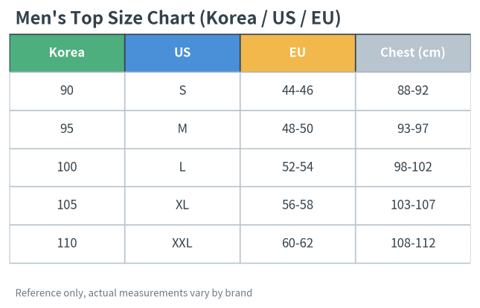
One thing has clearly changed since I started measuring myself. When shopping online, I no longer pick a size just from reviews, I check the actual measurement chart on the product page first. Returns have dropped noticeably too. When I browse overseas brand sites now, I also cross-check size conversions between countries, which I put together in the chart below.
Wrapping Up
While your body is still changing, the size you used to wear stops being a reliable reference point, and that is something I only learned the hard way. Measuring just the waist, shoulders, and sleeves with a simple tape measure cut down noticeably on wrong purchases. I still guess wrong sometimes and regret it, but at least now I know what to check to avoid most of those mistakes.